How many days do you need for a Tanzania safari?
Four full safari days is the honest minimum for the northern circuit — enough for Tarangire or Manyara, a proper taste of the Serengeti and a Ngorongoro Crater descent without the whole trip becoming a driving exercise. Three days works only if you fly in and focus on a single park. Fewer than that and you are commuting, not on safari.
Five to seven days — the sweet spot
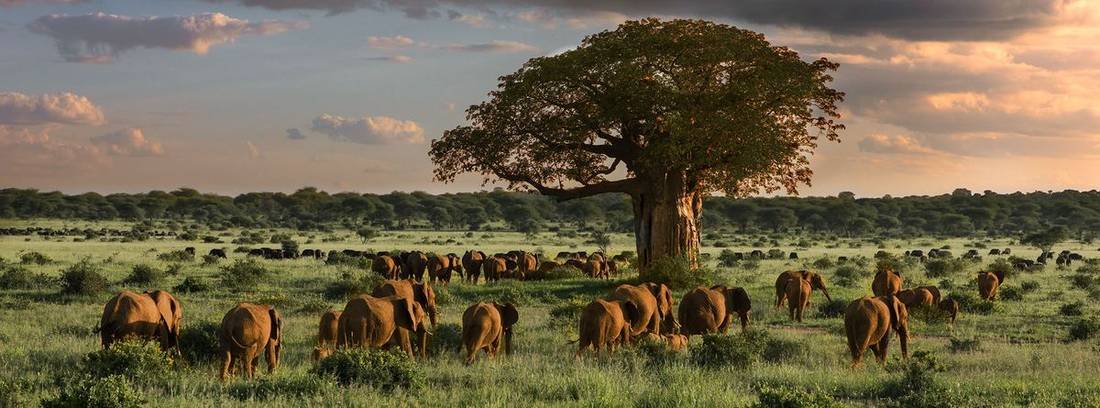
This is where most of our itineraries live, and where the safari changes character. With two or three full Serengeti days you stop collecting sightings and start following stories — the pride you saw hunting yesterday, the cheetah family from Tuesday. Add the crater and Tarangire's elephants and you have the full northern circuit at a civilised pace. Our six-day Classic Northern Circuit and seven-day Serengeti & Crater Highlights both sit deliberately in this band.
Ten days and beyond — depth or breadth
A longer safari buys one of two things. Depth: staying with the migration through multiple sectors, adding walking days in the highlands, or simply slowing everything down. Or breadth: adding Lake Eyasi's Hadzabe hunters, the southern parks, Kilimanjaro's foothills — or finishing on Zanzibar, which turns a safari into a complete holiday. Our eleven-day Migration & Culture Odyssey is the depth version; the 23-day Grand African Safari is what happens when you stop compromising altogether.
Three mistakes to avoid
Do not do the one-night-per-camp shuffle — packing every morning burns your best wildlife hours; two nights minimum per camp, three at the migration. Do not treat travel days as safari days when counting — a seven-day trip with two travel days is a five-day safari. And do not shave the Serengeti to fit everything else in; it is the reason you are coming, and it rewards every extra day more than any other park.
Day-by-day: what each additional day buys
Day one buys arrival and the first game drive — excitement, but logistics eat half of it. Day two buys your first full park day; day three buys the Serengeti properly; day four buys the crater and with it the classic circuit. Day five buys slowness — the first day nobody packs a bag, which changes the psychology of the whole trip. Days six and seven buy stories instead of sightings: the same cheetah found again, a den watched over mornings. Days eight to ten buy either a second ecosystem or the migration followed properly. Beyond ten, you are buying depth very few travellers ever taste — walking days, cultural days, the luxury of choosing to sit still.
Notice what no day buys: a guarantee. Wildlife is probability, and days are how you purchase probability.
Fly-in versus drive: how it changes the maths
Driving the northern circuit means Arusha to Serengeti is a full (spectacular) day each way. Flying converts each of those days into a half-day — light aircraft hop the same distance in an hour. On a four-day trip, flying is the difference between a real safari and a driving holiday; on eight or more days, the drives become part of the experience and the savings fund better camps. Our four-day Luxury Serengeti & Ngorongoro flies for exactly this reason; the Classic Northern Circuit drives because six days absorbs it gracefully.
Same days, three different safaris
Seven days as most people book it: one Tarangire, one Manyara, three Serengeti, one crater, one travel. Seven days for a photographer: five Serengeti in one sector with the right light, one crater, one travel — fewer parks, better pictures. Seven days for a family: two Tarangire, two Serengeti, one crater, and two genuine rest days by the pool. The itinerary is not the day count; it is what the days are asked to do. This is the whole argument for tailor-making rather than buying a fixed departure.
When shorter is actually right
We will argue for more Serengeti days all week, but honesty cuts both ways: a three-day fly-in safari bolted to a Zanzibar holiday or a Kilimanjaro climb is a legitimate, wonderful trip. So is a one-day crater visit for a traveller passing through Arusha. The mistake is not shortness — it is spreading three days across four parks. Concentrate whatever you have, and even a short safari feels complete.
What jetlag and travel days really do to a short safari
Most guests arrive off an overnight flight with a two-or-three-hour time shift — mild, but real. Day one's game drive through a yawn is a waste of the Serengeti, which is why every itinerary we build lands you gently: an Arusha coffee-farm night, a slow first morning, then the circuit. Factor the same honesty at the end — the drive or flight back to Kilimanjaro airport consumes most of a day. A "seven-day safari" bought without this arithmetic delivers five safari days; bought with it, seven days are planned as seven. When comparing itineraries from different operators, count the actual game-viewing days — it is the single quickest way to compare like with like.
The two-centre trick for longer trips
From about eight days, resist the urge to add more parks and instead add depth with a two-centre structure: one camp in the central Serengeti and a second in whichever sector the season favours — Ndutu in the green months, Kogatende in crossing season. You unpack twice, drive less, and see the same ecosystem from two personalities of camp. The alternative long-trip structure — a new park every night — photographs like a conquest and feels like a commute. Every extra day is precious; spend it standing still somewhere extraordinary rather than in transit between highlights.
The answer we actually give at the enquiry stage
When this question arrives in our inbox — and it arrives daily — our reply is a question back: what do you want to feel on the last evening? If the answer is "that we saw Tanzania's greatest hits," six days does it honestly. If it is "that we really got to know one wild place," eight days weighted into the Serengeti does it better. If it is "that we never once looked at the clock," that is a ten-day trip with rest built in. Days are just the container; the feeling is the specification. Tell us the feeling, and we will size the container — and if your diary only offers four days, we will build the best four-day version of that feeling rather than talk you out of coming.
There is no wrong number of days on safari. There are only days spent well or spent in transit — and the difference is planning, which is the part you hand to us.
Count the game-viewing days, protect the Serengeti's share of them, sleep two nights minimum wherever you stop, and the number you end up with — five, seven, ten — will have been the right one all along.
That, in the end, is the entire secret of safari planning: fewer moving parts, more standing still, and a guide with time on his hands and a full flask of coffee. The days count themselves after that — usually toward the next trip, which is a warning as much as a promise.
Frequently asked questions
Can you do a safari in 3 days?
Yes, if you fly and focus — three days in the Serengeti alone, or two Serengeti plus a crater day, is a genuine safari. Three days attempting four parks by road is a driving tour with animal glimpses.
Is a 5-day safari enough for Tanzania?
Five well-planned days covers Tarangire, two full Serengeti days and the crater — the classic circuit at a decent pace. It is our recommended minimum for first-timers who want the full northern experience.
How many days for the Serengeti alone?
Three full days is the honest answer — enough to reach different sectors, follow stories and absorb the scale. Two works at a push; one is a transit, not a visit.
Should I add Zanzibar, and how many days?
If you can: three to four nights turns the safari into a complete holiday, and the flight from the Serengeti takes a morning. Fewer than three nights barely unpacks; more than five suits pure beach lovers.
How many days including Kilimanjaro?
The mountain needs six to nine days itself for safe acclimatisation. Climb first, then safari as the reward — a climb plus the classic circuit plus recovery wants fourteen to sixteen days in-country.
Does a longer safari cost proportionally more?
Slightly less than proportionally — fixed costs (transfers, flights) spread across more days, and longer stays unlock better nightly rates at some camps. Days eight and nine are usually cheaper than days one and two.
Fit the days to the dream
Tell us how long you have — we'll tell you honestly what it can and can't deliver, then build the best version of it.
Plan your safari