Safari photography tips: getting the shot without missing the moment
Both of us shoot professionally when we are not running trips, and the question we hear most before a safari is not about lions or logistics. It is about lenses — usually with the worried follow-up: should I rent something bigger?
The honest answer is that most people bring too much glass and too little discipline. The photographs our guests regret are rarely the ones a longer lens would have saved. They are the ones missed while someone fumbled with settings as a leopard walked past, or a sighting spent entirely behind a screen.
This guide is what we tell guests who ask: what to bring, how to shoot from a vehicle, and when to stop shooting altogether. For the wider rhythm of a game-drive day — wake-up times, meals, how sightings actually unfold — our guide to your first safari covers that ground.
The 100-400 zoom that wins most safaris
If you own or can buy one lens for Tanzania, make it a 100-400mm zoom, or its equivalent on a crop-sensor body. Wildlife here is closer than first-timers expect. In Ngorongoro Crater and the central Serengeti, animals routinely stand near the track, and a lion beside the vehicle can be too close for a big prime to frame anything but an eyeball.
A 600mm prime is a magnificent tool for a professional chasing a specific frame. For everyone else it is heavy, slow to swing, tiring to hold and useless the moment an elephant fills the sky. We have watched guests fight a rented prime for a whole trip and go home with fewer keepers than the person beside them using a modest zoom. The ability to recompose in one second matters more than reach.
Your phone is genuinely fine for half the trip
For landscapes, camp life, sunsets and the memory shots — your guide laughing, the tent at first light — a recent phone is genuinely good, and it is the camera already in your hand. Crater rims, storm light over the plains and wide herd scenes often look better from a phone than through a telephoto.
Where phones fail is distance: push the digital zoom and a lion becomes a smudge. So split the jobs. Let the phone do the wide work and the camera do the long work, and you also stop swapping lenses in the dust, which your sensor will thank you for.
Beanbags beat tripods, and it is not close
A tripod has no place in a safari vehicle. There is no floor for the legs, they tangle with everyone else's, and the vehicle vibrates, which a tripod faithfully passes up to the camera.
A beanbag draped over the window sill or roof rail absorbs that movement instead. Pack an empty one and fill it on arrival with a kilo or two of rice or beans; it weighs nothing on the flight and everything where it counts. Ask before you travel whether your vehicle will have one on board.
One habit makes a bigger difference than any accessory: when a sighting settles, ask for the engine off. At 400mm, the difference between an idling vehicle and a silent one shows in every frame.
Two golden hours and a hard white middle
Northern Tanzania sits just south of the equator, so sunrise and sunset barely move all year — both fall within a few minutes of half past six. The first ninety minutes of light and the last ninety are when it is low and warm and the cats are still moving. That is why game drives start early, and why the alarm is worth it.
From late morning the light turns hard and white, shadows go black and most animals lie flat. Keep shooting — behaviour beats light, and a hunt at noon is still a hunt — but plan your ambitions around the two golden windows and treat everything between as a bonus.
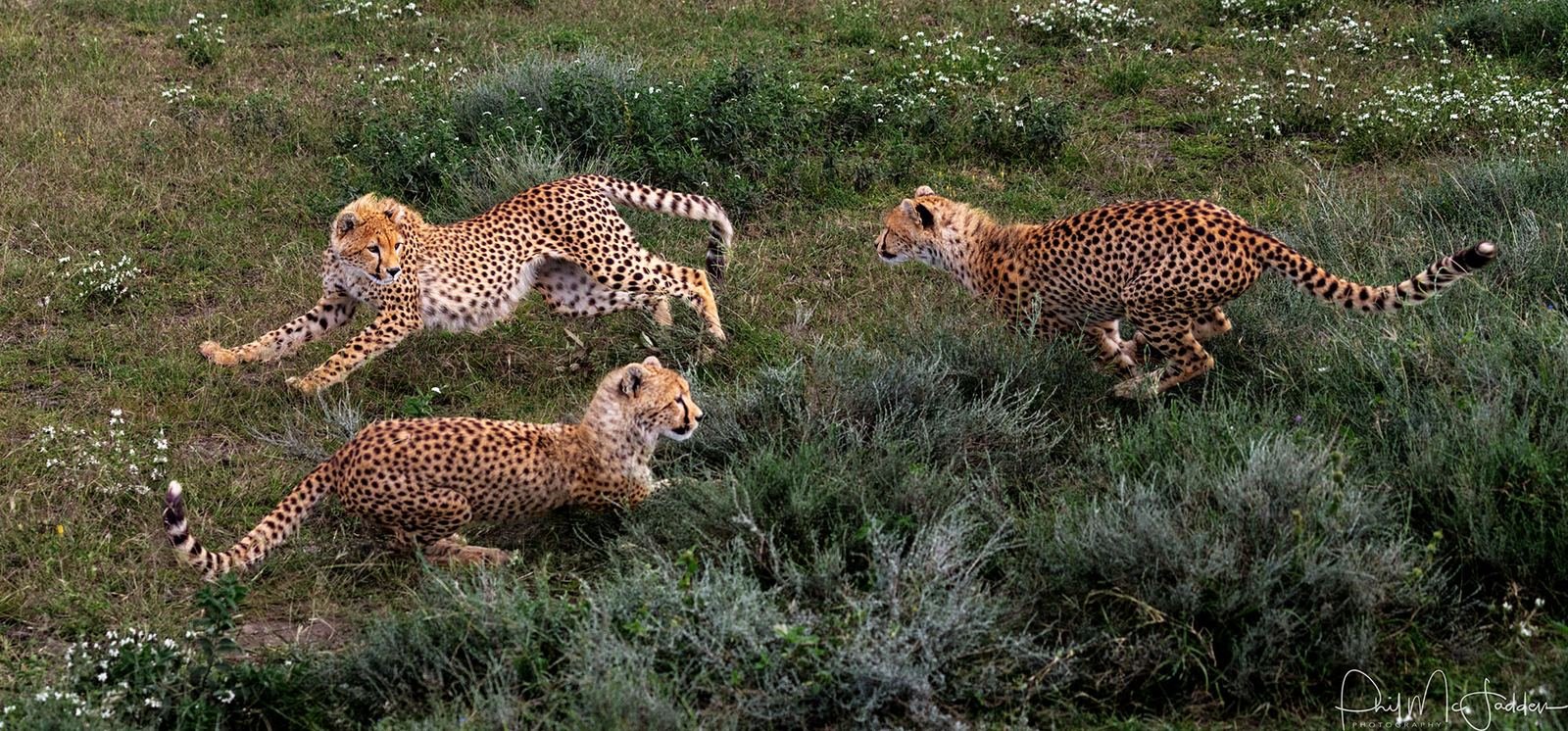
Exposing for a lion in the shade
The classic Tanzanian miss: a dark animal under a tree, bright grass behind it, and the camera's meter splits the difference, leaving you a silhouette. You have to tell the camera the animal matters more than the background.
Spot metering on the animal works, and so does simply dialling in positive exposure compensation and checking the screen. Shoot RAW if your camera allows it — shadows lift cleanly in editing, blown highlights do not, so hold the bright grass just short of white and rescue the cat on the laptop later.
Settings you set once, then forget
The vehicle is not the place to learn your camera's menus. Before you fly, set continuous autofocus, a modest burst mode, and auto ISO with a minimum shutter speed fast enough to freeze movement — around 1/1000s for animals doing anything interesting. Then leave it all alone.
Our rule of thumb: if you are thinking about settings during a sighting, your settings are wrong. Practise at home on dogs, birds, children — anything that moves without warning. An hour in the garden is worth more than another item in the bag, and it is free.
The first two minutes belong to your eyes
Here is the discipline that separates a good safari from a great one: when you reach a sighting, keep the camera down for the first minute or two. Watch. Let your guide read the animal aloud — the flicked tail, the fixed stare, what it is likely to do next. That reading is a large part of what you are paying for.
You will shoot better afterwards, because you will anticipate the yawn, the stretch, the look-back instead of reacting to it half a second late. And you will actually remember the leopard, rather than the back of a camera. No guest has ever told us they wished they had watched less.
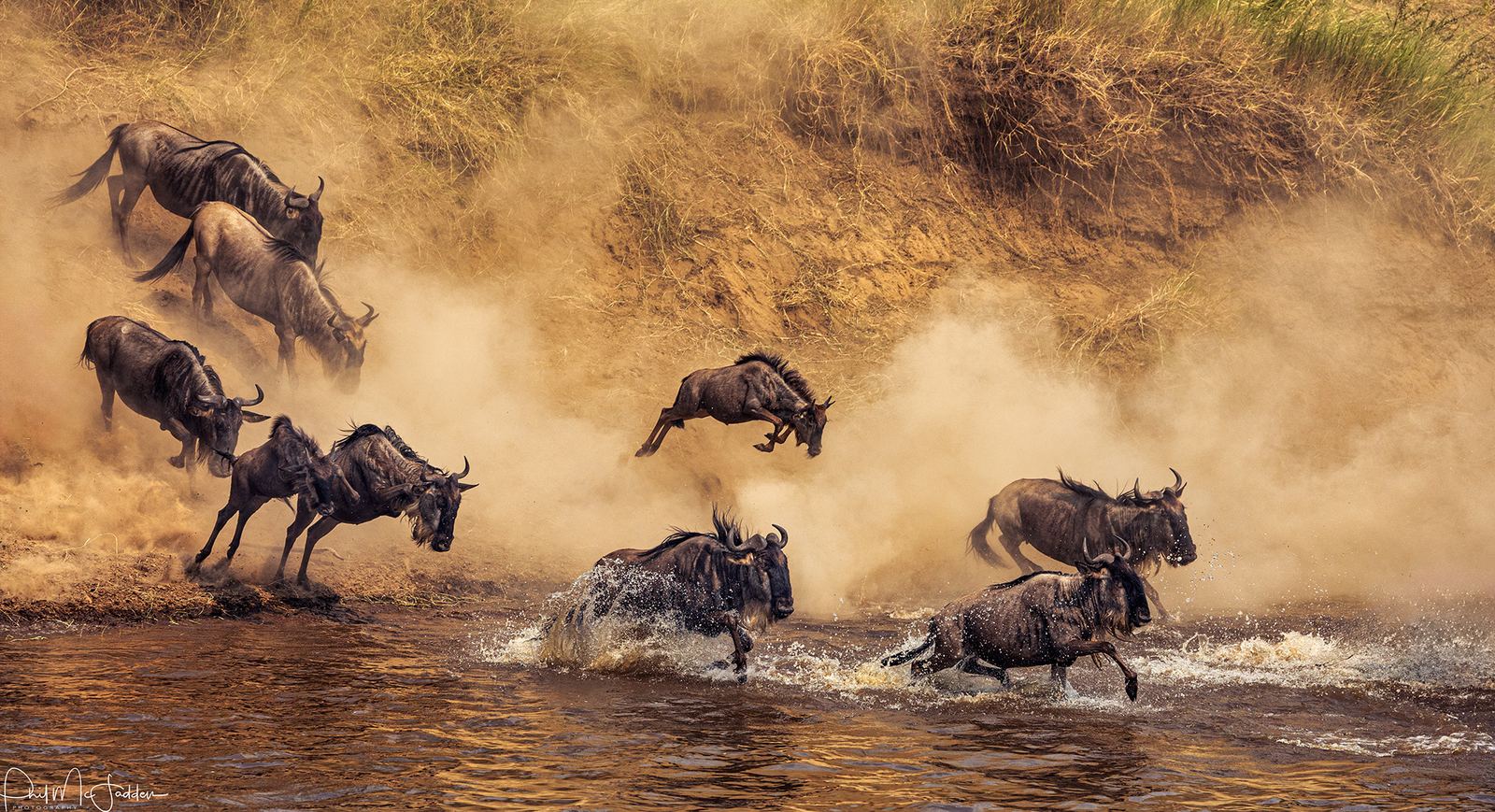
Dust gets into everything, so plan for it
Serengeti dust is fine as flour and it finds every gap. Never change lenses in a moving vehicle; wait for a stop, point the camera body downward and be quick about it. If you carry two bodies, put the long zoom on one and a wide lens on the other and stop changing lenses altogether.
A blower, a microfibre cloth and a few ziplock bags will keep equipment alive for two weeks — blow and wipe every evening before the dust binds to the glass. Our Tanzania packing list covers the rest of what earns its place in the bag.
The ethics: no photograph is worth it
No frame justifies changing an animal's behaviour. That means no baiting, no calls played from a speaker, no asking your driver to edge closer to a hunting cheetah, and no adding your vehicle to a scrum around a leopard just because everyone else has.
A good guide positions you well and then holds the line, and you should never push past it. Off-track driving where it is banned risks the guide's licence, and crowding stresses the very animals photographers claim to love. The best wildlife photographers we host are consistently the most patient people at a sighting — and the quietest.
Back up every evening, no exceptions
Assume a memory card will fail, because occasionally one does. Shoot to both slots at once if your camera has two, and every evening copy the day somewhere second: a laptop, a portable SSD, or for phone shooters the cloud when lodge wifi allows.
Cards are cheap now — bring more capacity than you think you need and never delete in the field to make space. Most lodges and camps offer charging, though in remote camps power may run only certain hours, which is one more reason a power bank rides in the day bag.
Leave the drone at home
Flying a drone in Tanzania's national parks requires a stack of approvals — civil aviation registration, filming clearance, park authority permission — that ordinary visitors will not get, and the Serengeti is stricter still. Do not pack one hoping to sort it out on arrival; it will sit in its case or get you into real trouble.
Bring good binoculars instead. The scenes you cannot photograph are still worth seeing properly, and a shared pair of binoculars starts more conversations in a vehicle than any camera does.
One frame a day you would print
Our measure of a photographic safari is not a full card. It is one frame a day you would actually print, and that standard changes how you shoot: you slow down, wait for light, and spend the rest of each sighting simply watching — which is the reason you came.
If you are still shaping the trip itself, start with our expeditions and write to us. We are happy to build an itinerary around morning light rather than around lunch, and to say plainly which parks suit the photographs you have in mind.
Frequently asked questions
What is the best camera lens for a safari in Tanzania?
For most travellers, a 100-400mm zoom on any recent body covers nearly everything, because animals are often closer than you expect and a zoom lets you recompose instantly. Long primes such as a 600mm suit professionals working a specific shot; for everyone else they are heavy, tiring and inflexible. If you can add a second lens, a wide zoom for landscapes completes the kit.
Is a phone camera good enough for safari photos?
For landscapes, camps, sunsets and people, yes — a recent phone performs genuinely well and is always to hand. For animals at distance it is not: digital zoom quickly turns a lion into a blur. Plenty of guests travel with a phone plus a modest camera and zoom, use each for what it does best, and come home happy with both.
Do I need a tripod on safari?
No. Almost all your photography happens from the vehicle, where a tripod's legs have nowhere to go and the chassis passes engine vibration straight up through them. A beanbag on the window sill or roof rail steadies a long lens far better. Bring an empty one and fill it locally with rice or beans, or ask whether your vehicle carries them.
How do I protect my camera from dust on safari?
Never change lenses while the vehicle is moving; wait for a stop, point the body downward and swap quickly. Keep gear in a closed bag or ziplock between sightings, and clean it every evening with a blower and microfibre cloth before dust binds to the glass. Carrying two bodies — one long lens, one wide — removes lens changes entirely.
Can you fly a drone in the Serengeti?
Realistically, no. Drone flying in Tanzania's national parks requires layered permissions — civil aviation registration, filming clearance and park authority approval — that ordinary visitors will not obtain, and enforcement in the Serengeti is strict. Assume your drone cannot fly anywhere on a standard safari and leave it at home rather than risk confiscation or a fine.
How do I back up photos while on safari?
Copy every day's photos to a second place each evening: a laptop, a portable SSD, or cloud storage when lodge wifi allows. If your camera has two card slots, record to both at once. Bring more cards than you expect to fill and never delete images in the field. Most lodges offer charging, so a small nightly routine is easy to keep.
Tell us what you want to photograph
We plan every itinerary ourselves and we both shoot. Write to us with the photographs you have in mind and when you can travel, and we will reply with an honest plan — which parks, which season, which light — and a written quote for the whole trip.
Plan your safari