Ngorongoro Crater guide: wildlife, fees and the crater-floor day
The Ngorongoro Crater gives you the most reliable single game-viewing day in Tanzania, and also the most expensive one. Both things are true at once, and nearly every question we get about the crater comes down to weighing one against the other. This guide covers what the caldera actually is, what you will realistically see, how the day runs hour by hour, and what it costs.
We run a two-director safari company in Arusha, and between us we have driven the crater floor more times than we can count. What follows is the briefing we give our own guests before a crater day, written down. The fee figures are 2026 rates including VAT; they change, so check current rates before you budget.
What the caldera actually is
Ngorongoro is not a crater in the meteor sense. Around 2.5 million years ago a large volcano here erupted so completely that it emptied its own magma chamber, and the cone collapsed inward. What remains is the largest intact, unfilled volcanic caldera on earth: a floor of roughly 260 square kilometres, about 19 kilometres across, ringed by walls some 600 metres high.
Those walls are why the wildlife is there. The floor has permanent water, a soda lake, springs and swamp, surrounded by open grassland, so most of the animals that live down there simply never leave. Unlike the Serengeti, where everything moves with the rain, the crater holds its population year-round.
How much wildlife is really down there
Estimates put the number of large animals on the floor at around 25,000, which on 260 square kilometres makes this one of the densest concentrations of big mammals anywhere. Resident wildebeest and zebra graze in their thousands, with gazelle, buffalo and warthog among them, and lion and spotted hyena live at unusually high densities off all that food.
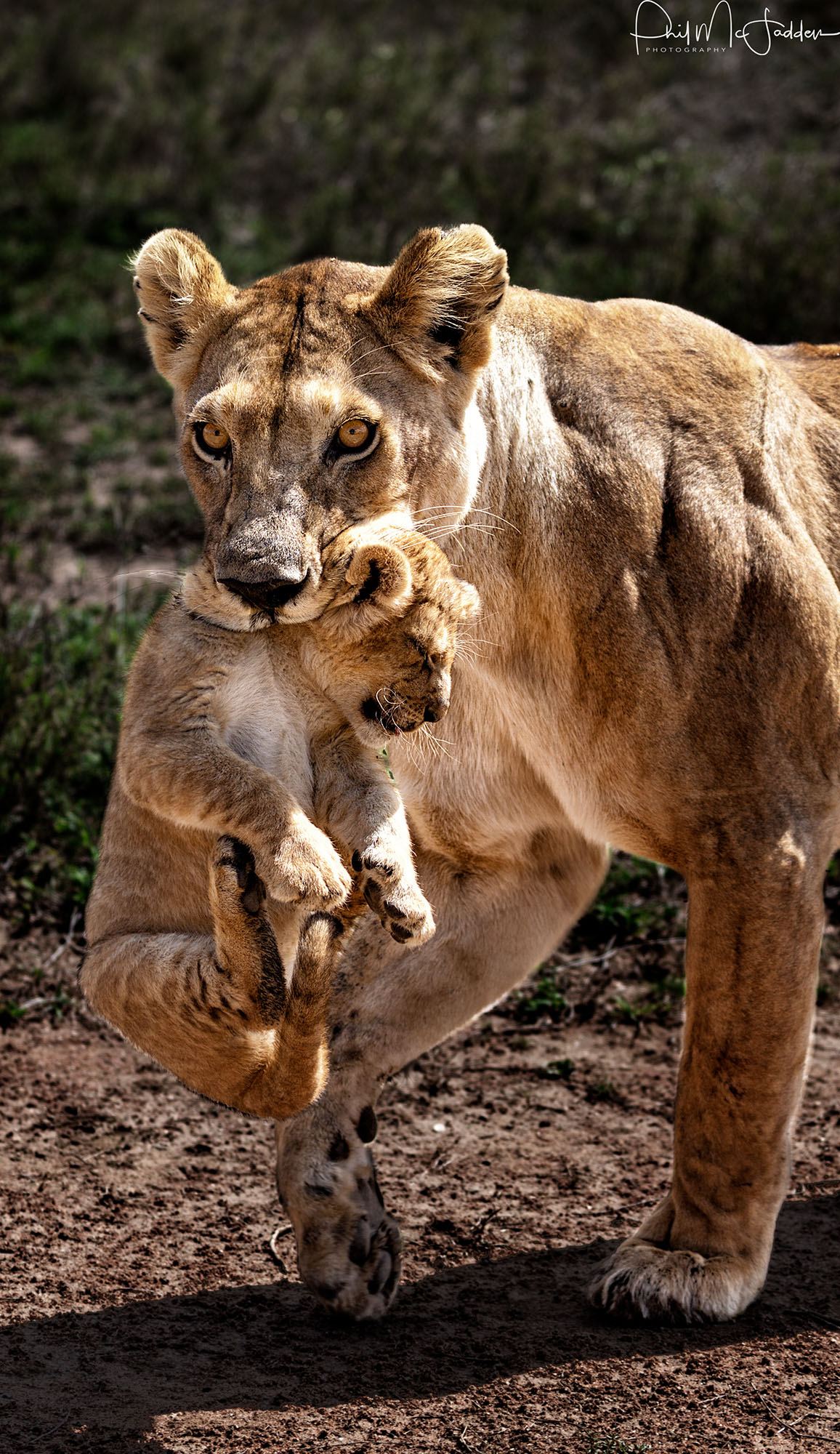
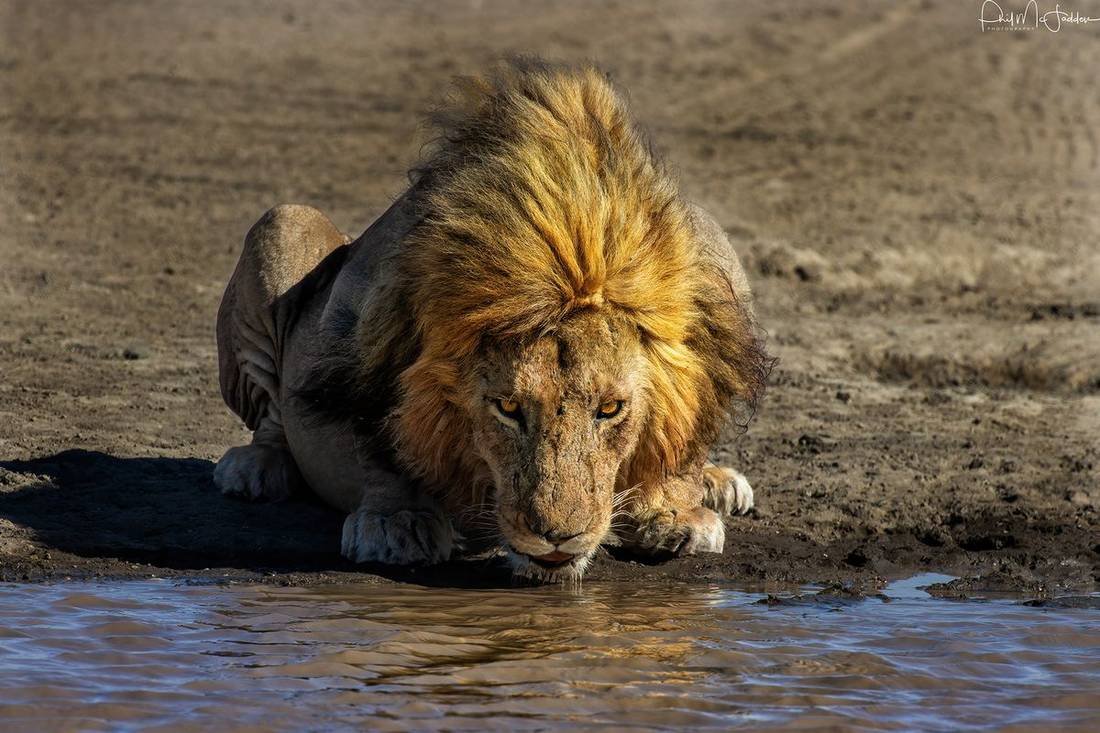
A realistic single loop gives you lion on almost every visit, old bull elephants carrying heavy ivory, big buffalo herds, hyena active in daylight, and flamingo on the soda lake when water levels suit them. One honest caveat: there are no giraffe on the crater floor, because the descent is too steep and the trees are wrong for them, so do not expect the full Serengeti cast in miniature.
Black rhino, honestly
The crater holds a small population of black rhino, commonly put at 30 to 40 animals and guarded around the clock, and it is the one place in northern Tanzania where you have a realistic chance of seeing one in the wild. Most crater days do produce a sighting.
But be honest with yourself about what a sighting means. Far more often than not it is a grey shape a few hundred metres out, resolved through binoculars, not a road crossing in front of your vehicle. Our guides scan the open plain early, because rhino tend to drift toward cover as the day warms. If a close rhino encounter is the main reason you are coming, know the odds before you spend the money.
The crater-floor day, hour by hour
Driving inside the conservation area runs 06:00 to 18:00, and our advice is simple: be at the descent road when it opens at 06:00. The descent and ascent use separate one-way roads, only 4x4 vehicles are permitted on the floor, and the speed limit down there is 25 km/h, so distances that look trivial on a map take real time.
That early hour is not machismo. The light is at its best, the predators are still moving, and you buy yourself roughly two hours of floor time before the bulk of vehicles arrive. Crater mornings are also cold, since the rim is high and often sits in cloud, so bring proper layers and expect the first hour to be chilly in an open-roof vehicle.
Six hours on the floor, and where lunch happens
By convention each vehicle gets six hours on the crater floor, tracked from the descent gate, so the day needs a plan rather than aimless wandering. Our guides route it deliberately: open plains and the lake early, forest and swamp late morning, lunch, then the ascent.
About lunch: the designated picnic sites are pleasant on paper and busy in practice, and the resident black kites have learned to snatch food out of open hands. Most experienced guides serve lunch inside the vehicle with the roof closed, which sounds less romantic and works far better. Toilets at the main sites are functional but queue at midday.
What the day actually costs
This is the part that surprises people. In 2026 the conservation fee is USD 83.54 per adult per 24 hours, plus USD 23.60 vehicle entry, plus the crater service fee of USD 295 per vehicle for the descent itself, rising to USD 348 at peak times. The service fee is per vehicle, not per person, so a full car shares it six ways while a couple carries it alone.
Add rim or Karatu lodging and a crater day is comfortably the most expensive single day you will spend in Tanzania. We break down how the whole trip budget fits together in our safari cost guide; the short version is that the crater is a known, fixed premium, and everyone pays it.
Our verdict: worth it once
For a first safari, yes, the crater earns its fees. Nowhere else in Tanzania compresses this much wildlife into six hours, and the setting, game viewing inside a 600-metre-deep volcanic bowl, genuinely has no substitute.
Repeat visits are where the maths gets weaker. Once you have done the floor properly, a second descent adds less than an extra day in the Serengeti usually would. If you are choosing between the two rather than combining them, we have argued that question through separately in Serengeti or Ngorongoro rather than re-arguing it here.
Rim lodge or Karatu
Rim lodges give you the view, sunrise over the caldera from your breakfast table, and the shortest run to the descent road. The trade-offs are real: rim nights are cold, cloud is common, and the price premium is significant.
Karatu, the farm town on the tarmac just below Lodoare gate, is our default for most guests. Lodging there is warmer, better value and more varied, and with a 05:30 start you still reach the descent road close to opening. You give up a little morning margin and the rim-edge view; you keep a meaningful amount of money.
When to go
Because the wildlife is resident, there is no bad season for the crater itself. June to October gives dry footing, short grass and the biggest crowds; November to February is greener and quieter; the long rains from March to May bring mud to the floor tracks and low cloud on the rim, though the crater rarely becomes undriveable.
Our month-by-month reasoning for the whole country is in when to visit Tanzania, and it applies here with one twist: the crater rewards the quiet months more than most parks, because vehicle numbers are the main thing that varies from season to season.
Crowds, and how our guides work around them
We will not pretend the crater is a wilderness experience. It is a small floor with one famous reputation, and on a peak-season morning the descent road can look like a procession. A lion or rhino sighting draws a ring of vehicles within minutes, because every guide is on the same radio.
The counters are simple and they work. Descend at 06:00, when most vehicles are still at breakfast. Drive the loop against the flow rather than with it. Accept a quieter corner over a crowded sighting, since the crater is generous enough that another one comes. And take lunch early or late, so your best floor hours do not coincide with everyone else's.
Getting there, and where it fits in a route
From Arusha it is about 150 kilometres to Lodoare gate, tarmac end-to-end, and it takes 3 to 4 hours. Tanzanian passenger vehicles are speed-governed at 80 km/h and every village has its 50 km/h limit and speed bumps, which is why map estimates run optimistic here.
Most people do not drive up just for the crater. It sits on the main road to the Serengeti, so it slots naturally between Tarangire or Lake Manyara and the western parks, usually as one night and one crater day. How that fits into a five, seven or ten-day route is a bigger question, and we have laid the options out in how many days you need.
Frequently asked questions
Is Ngorongoro Crater worth the money?
For a first safari, we think yes. The crater delivers more large animals per hour than anywhere else in Tanzania, with a realistic chance of black rhino and near-certain lion, all inside a setting that exists nowhere else. It is the most expensive single day in the country, and it is usually worth paying for once. On repeat trips the case weakens, and extra Serengeti time often serves you better.
How much does it cost to enter Ngorongoro Crater?
As of 2026, the conservation fee is USD 83.54 per adult per 24 hours plus USD 23.60 per vehicle, and the crater descent carries a service fee of USD 295 per vehicle, rising to USD 348 at peak times. The service fee is shared by everyone in the car, so group size changes the per-person cost significantly. Fees change; check current rates before budgeting.
Can you really see black rhino in Ngorongoro Crater?
Yes, and it is the most reliable place in northern Tanzania to do so. The crater holds a guarded population commonly put at 30 to 40 black rhino, and most crater days produce a sighting. Manage expectations, though: rhino are usually seen at several hundred metres through binoculars, out on the open plain in the early morning, rather than close to the vehicle.
How long are you allowed inside Ngorongoro Crater?
By convention each vehicle gets six hours on the crater floor, timed from the descent, and all driving in the conservation area runs 06:00 to 18:00. Six hours is enough for a full loop if the day is planned. Our advice is to descend at 06:00, when the light is best and most other vehicles have not yet arrived.
Should I stay on the crater rim or in Karatu?
Rim lodges buy you the caldera view and the shortest drive to the descent road, at a significant premium and with cold, often cloudy nights. Karatu, on the tarmac below the entry gate, offers warmer weather, better value and more choice, and an early start still gets you to the descent road close to opening. We book Karatu for most guests unless the rim view itself is the point.
What is the best time of year to visit Ngorongoro Crater?
The wildlife is resident, so the crater works in every month. June to October gives dry tracks and peak crowds; November to February is green and noticeably quieter; March to May brings rain and mud, but the floor rarely closes. If crowds bother you more than weather, the green season is the better trade.
Planning a crater day?
We are a two-director company in Arusha and we quote every trip individually, in writing, with the crater fees itemised so you can see exactly where the money goes. Tell us your dates and we will tell you honestly whether the crater belongs in your route.
Plan your safari