The Big Five in Tanzania: where you will actually see them
Almost every enquiry we receive mentions the Big Five, usually in the first two lines. It is a fair question with an awkward answer: three of the five are close to guaranteed in northern Tanzania, one takes patience, and one is genuinely hard. Knowing which is which changes how you should plan a week.
So this is our honest accounting, animal by animal — where each one actually lives, what your odds really are, and why our guides quietly wish the phrase would retire. Everything here is the northern circuit we drive out of Arusha every week of the year.
A hunting term, not a wildlife ranking
The Big Five were chosen by trophy hunters, not naturalists. Lion, leopard, elephant, buffalo and black rhino were the five animals considered most dangerous to hunt on foot, which is why the list ignores giraffe, hippo and cheetah entirely. It measured risk to a man with a rifle, nothing else.
The label survived because marketing found it useful, and we understand why: it gives a first safari a shape. But it is a hunting checklist wearing a conservation costume, and treating it as the measure of a trip pushes people into strange decisions. We will come back to that.
Lion: excellent odds, if you go where they live
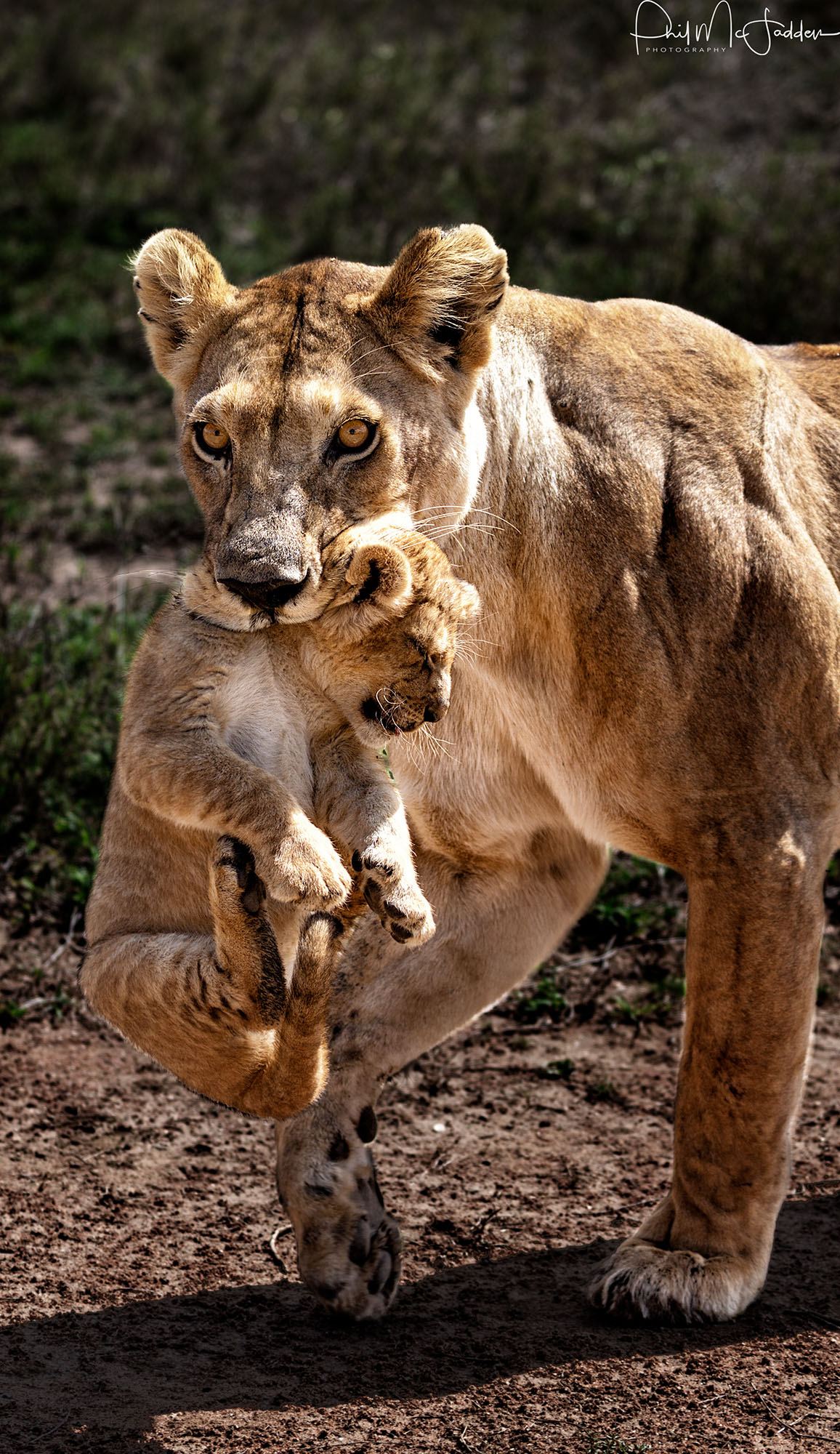
Lion is the easy one, provided you go where the prides are. The Serengeti carries one of the densest lion populations in Africa, and around Seronera in the centre our guides expect sightings on most game drives, often several in a day. Ngorongoro Crater is more compact still: resident prides live on the floor and are seen most mornings.
The honest caveat is that lions rest for most of the day. Your first sighting may be a flat, sleeping tangle of tawny bodies under a tree. The memorable lion sighting is behaviour — a hunt, cubs, a territorial dispute — and that is a matter of hours spent in the park, not luck at the gate.
Elephant: Tarangire, and it is not close
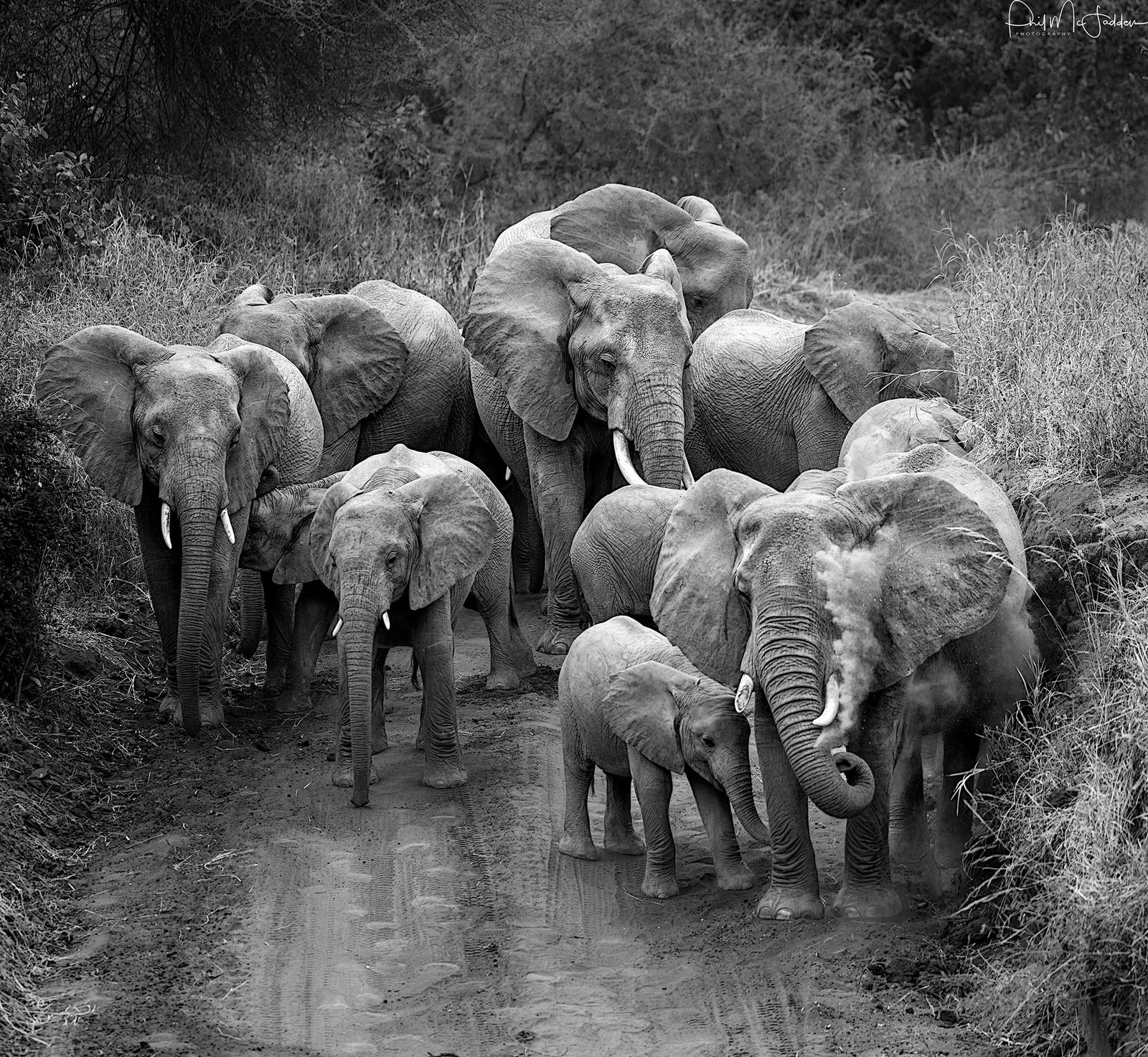
If elephants matter to you, Tarangire settles it. In the dry months the Tarangire River is the only reliable water for a long way, and breeding herds walk in from the surrounding rangelands every day to drink, dig and dust-bathe. We treat elephant here as close to a guarantee as wild animals allow.
Tarangire's gate is also only two to two and a half hours' drive from Arusha, which makes it the natural first day of a northern circuit. Watching a herd cross the river below the baobabs in late-afternoon light is, for many of our guests, the sighting that survives longest in memory.
Buffalo: near-certain, and quietly underrated
Buffalo are the sighting nobody plans for and everybody gets. Big herds graze the crater floor and the Serengeti's longer grass, and old bulls stand caked in mud in Tarangire's marshes. Missing them across a multi-day safari would take real effort.
Most visitors photograph one and move on, which is a small shame. Sit with a herd for ten minutes and there is more going on than the famous stare — oxpeckers working the hides, calves testing their place, old bulls holding grudges. Buffalo taught our guides patience long before leopards did.
Leopard: the Seronera river lines, and patience
Leopard is where the odds start to depend on you. Central Serengeti is the strongest ground in Tanzania: the Seronera River's sausage trees and yellow-barked acacias hold resident leopards that drape themselves, and their kills, along the horizontal branches. Over two days there, with a guide working the river lines slowly, your chances are good. In a single rushed afternoon, they are not.
The speed limit around Seronera is 25 km/h, and frankly that suits the search. Leopards are found by scanning branches at walking pace, not by covering distance. Tell your guide early that leopard matters to you, then let them be slow.
Rhino: the honest answer
Black rhino were poached almost out of northern Tanzania in the last century, and no amount of brochure optimism changes that. Today a small, heavily guarded population lives on the floor of Ngorongoro Crater, and a few survive among the Serengeti's Moru Kopjes. That is the entire realistic picture.
The crater is your play. Sightings happen on most days, usually at long range — a dark shape moving through the grass, best appreciated through good binoculars. If a close-up rhino is the point of your trip, be honest with yourself and look at fenced sanctuaries elsewhere in Africa. If a wild black rhino inside a collapsed volcano, seen at distance, counts — and we think it should — the crater delivers more often than not.
The route that covers all five
The classic answer is a loop: Tarangire for elephant and buffalo, Ngorongoro Crater for lion and the rhino chance, then the Serengeti for leopard and everything else. The geography cooperates — Ngorongoro's Lodoare gate is three to four hours from Arusha on tarmac, and Seronera is a further full day's drive of eight to ten hours, which is why most itineraries break the journey rather than race it.
If your dates force a choice between the crater and the Serengeti, that trade-off deserves its own discussion, and we have written one — see Serengeti or Ngorongoro: which to choose. The short version: the crater compresses the odds into one morning; the Serengeti gives behaviour the room to happen.
Why chasing the checklist ruins days
Our guides' rule of thumb is that guests who arrive with a list have worse safaris than guests who arrive with time. Chasing five ticks means driving past wonderful sightings toward rumoured ones, joining a queue of vehicles at a leopard tree, and grading each day by what it lacked. The animals do not know they are on a list.
Our suggestion: tell your guide on day one that the five matter to you, then let it go. Steered gently rather than chased, the list tends to complete itself — and the days feel entirely different. For an honest picture of how a game-drive day actually unfolds, hour by hour, read our first-safari guide.
The sightings that outrank the list
Ask a guide for their best sighting of the year and it is rarely a Big Five animal. African wild dogs are so scarce in northern Tanzania that a sighting empties every radio channel in earshot; our guides would trade a week of lions for one hunting pack. Cheetah on the short-grass plains are a far better bet, and a full-speed chase across open ground beats any sleeping lion ever photographed.
Then there is the small stuff: a serval stalking through long grass, a honey badger trotting across the track, bat-eared foxes at a den. The guests who go home happiest kept a list of what showed up, not a list of what was owed.
What the parks charge, roughly
Entry fees are real money and worth knowing before you compare quotes. As of 2026, Tarangire and Lake Manyara run about USD 59 per adult per day, the Serengeti about USD 83, and Ngorongoro charges a conservation fee of USD 83.54 per 24 hours plus USD 23.60 per vehicle — with a separate crater descent fee of USD 295 per vehicle, rising to USD 348 at peak times. Fees change, so check current rates when you book.
Two practical notes: only 4x4 vehicles are allowed on the crater floor, and game driving everywhere runs 06:00 to 18:00. For how these fees stack into a full trip budget, our cost guide breaks it down line by line.
How we would plan it
Season first. The dry months from roughly June to October concentrate animals at the remaining water and thin the grass, which lifts your odds for every animal above; our month-by-month guide covers the trade-offs, including the quieter green seasons.
Then days. The loop above wants five or more to feel unhurried, mostly because Seronera is far away and leopards do not work to deadlines. And finally the promise: we will never guarantee you the five, because nobody honest can. We will put you on the right rivers, at the right hour, with a guide who knows which branch to scan — and in our experience, that is usually enough.
Frequently asked questions
What are the Big Five animals, and why are they called that?
Lion, leopard, elephant, Cape buffalo and rhinoceros — in East Africa, the black rhino. The name comes from trophy hunting: these were considered the five most dangerous animals to hunt on foot, so the label measured risk to the hunter, not rarity or beauty. Safari marketing adopted the phrase much later. It remains a useful shorthand for a first trip, as long as you treat it as a starting point rather than a scorecard.
Can you see the Big Five in one day in Tanzania?
Only in Ngorongoro Crater, and only with luck. The crater floor holds lion, elephant, buffalo and black rhino in a small area, so four of the five in one morning is realistic. Leopard is the weak link — they favour the rim forests and are rarely seen on the floor. Treat a one-day Big Five as a happy accident rather than a plan; a multi-park itinerary gives every animal far better odds.
Which park in Tanzania has all of the Big Five?
On paper, the Serengeti: lion, leopard, elephant and buffalo are all well established, and a small number of black rhino survive around the Moru Kopjes. In practice a Serengeti rhino sighting is rare, so most travellers cover the five by combining the Serengeti with Ngorongoro Crater, where rhino sightings happen on most days. Tarangire adds the best elephant viewing in the north.
How likely am I to actually see a rhino in Tanzania?
Honestly: on a crater visit, better than even on most days, but at long range and never guaranteed. The floor's black rhino are few and heavily protected, and they often keep hundreds of metres from the tracks. Bring binoculars, give the morning time, and calibrate expectations: a distant wild black rhino is the realistic prize. Close-range rhino viewing is not something northern Tanzania reliably offers.
Are there leopards in Ngorongoro Crater?
Yes, but you are unlikely to see one there. Leopards live mainly in the forests of the crater rim and the wooded slopes, not the open floor where game drives happen, so sightings are uncommon. If leopard is a priority, plan two or more days in the central Serengeti and ask your guide to work the Seronera river lines slowly. That is where Tanzanian leopard sightings actually happen.
Is Tarangire good for the Big Five?
For three of them, excellent: the elephant viewing is the best in northern Tanzania, buffalo are close to certain, and lion are resident and seen regularly. Leopard are present but seen less often than in the central Serengeti, and there are no rhino. We use Tarangire as the opening day of a Big Five itinerary rather than a one-stop answer — the gate is two to two and a half hours from Arusha.
Plan around real odds
Tell us which of the five matter most to you and how many days you have, and we will draft a route that puts you in the right place for each — with honest odds attached, not promises. Every quote is written per booking, in plain figures, from our desk in Arusha.
Plan your safari